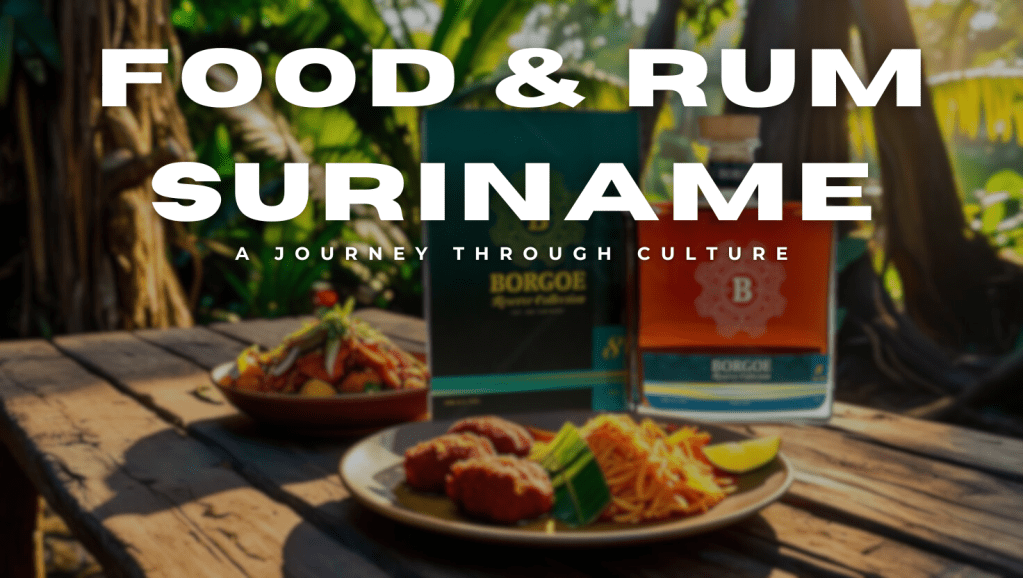
In Suriname, rum is much more than just a beverage, it’s a flavorful ingredient deeply rooted in our country’s culinary culture. From traditional cakes soaked in its essence to savory dishes enhanced by its depth, rum plays a starring role in Surinamese kitchens.
Suriname boasts a rich tradition of rum-making, with local favorites like Borgoe and Hanappier standing out as household names. These iconic rums, each with their unique history and flavor profile, have been crafted to perfection. Borgoe was established in 1966, while Hanappier’s origins date back even further. Together, they not only reflect Suriname’s love for this versatile spirit but also highlight its ability to blend perfectly with the diverse cultural influences found in Surinamese cuisine.
In this post, we’ll take you on a flavorful journey through Suriname’s food scene. We’ll uncover how these local rums enhance and elevate the different recipes, creating perfect pairings that celebrate the spirit and flavors of Suriname.
Popular Surinamese Rums
Borgoe
Introduced in 1966
Flavor Profile: Borgoe is known for its smooth, well-rounded character. It has a medium-bodied sweetness with hints of vanilla, caramel, and subtle spices, making it ideal for sipping neat or adding depth to cocktails and desserts. Most traditional cakes are made with Borgoe.
Hanappier
Introduced in the early 20th century (I don’t know the exact year)
Flavor Profile: Hanappier rum has a richer, more robust taste with pronounced notes of oak, dried fruits, and a warm, lingering spice. It’s often used in more indulgent recipes and is a favorite among those who enjoy bold, complex rums.
Black Cat Rum
Introduced in the mid-20th century
Flavor Profile: Black Cat is a lighter rum with a subtle sweetness and smooth finish. It has delicate floral and fruity notes, making it a versatile choice for cocktails or a refreshing mixed drink.
Marienburg Rum
Dates back to colonial times
Flavor Profile: Marienburg is an exceptionally strong rum with an ABV of up to 90%. Its intense, fiery taste is not for the faint-hearted but is often used sparingly in traditional recipes or for creating infusions. In recent years it’s become a very popular hand sanitizer when mixed with water.
Cultural Influences on Surinamese Cuisine
Suriname’s culinary scene is a true reflection of its rich multicultural history. The blending of flavors, ingredients, and cooking techniques from Indigenous, African, Indian, Javanese, Chinese, and European traditions creates a food culture unlike any other. Let’s explore the cultural influences and some of the signature dishes they’ve contributed to our diverse cuisine.
1. Indigenous Influences
The Indigenous peoples of Suriname laid the foundation for the country’s culinary identity. Their traditional cooking methods, such as grilling over open flames and using cassava as a staple, remain integral to Surinamese cuisine.
- Signature Dish: Peprewatra – A spicy fish soup flavored with cassava, peppers, and fresh herbs.
Immerse yourself in more Indigenous culture and traditions by clicking below!
2. African Influences
African enslaved people brought with them unique cooking techniques, flavors, and ingredients such as okra, plantains, and peanuts. These elements have become staples in Surinamese cuisine, adding heartiness and richness to the food.
- Signature Dish: Pom – A casserole made with grated pomtajer (a tropical root in the same family as dasheen), chicken, and citrus juice, often served during festive occasions (especially during Christmas and end of the year celebrations).
3. Indian Influences
Indian indentured laborers introduced an array of spices, lentils, and rice dishes to Suriname. Their cuisine is known for its bold flavors and fragrant curries.
- Signature Dish: Roti with Curried Chicken – Served with potatoes and vegetables, often accompanied by pickles.
4. Javanese Influences
Javanese immigrants brought their love of rice, noodles, and peanut-based sauces to Suriname. Their dishes are known for their balance of sweet, savory, and spicy flavors.
- Signature Dish: Saoto Soup (the indonesian name is “Soto Ayam) – A flavorful chicken soup served with rice, boiled eggs, fried potatoes, and sambal (chili paste).
Dive deep into the captivating world of the Javanese culture and its vibrant history by clicking below!
5. Chinese Influences
Chinese immigrants enriched Surinamese cuisine with stir-fried dishes, soy-based sauces, and the use of noodles. Their influence is most evident in the country’s fast-food and street food culture.
- Signature Dish: Tjauw Min – A stir-fried noodle dish loaded with vegetables, meats, and flavorful sauces.
6. European Influences
The Dutch colonizers brought European baking traditions and dairy products, which have been adapted to local tastes. Many fusion dishes arose from the combination of European techniques and local ingredients.
- Inspired Dish: Bojo – A gluten-free cassava and coconut cake, sweetened with sugar and baked to perfection.
Each culture has added its own spice to the Surinamese cuisine, creating a harmonious blend of traditions that tell a story of resilience, adaptation, and community. This culinary diversity is what makes Suriname’s food culture so vibrant and exciting to explore.
Perfect Pairings: Food and Rum
Rum isn’t just for sipping in Suriname, it’s a beloved ingredient that adds depth and richness to many dishes and traditional cakes. Below, we explore some signature Surinamese baked goods and some local dishes infused with the local rums, along with their cultural origins.
1.Fiadoe
- Cultural origin: Fiadoe has its roots in Suriname’s colonial history, influenced by European cake-baking traditions and blended with local ingredients and techniques. The use of brown sugar and molasses is a nod to the country’s sugarcane plantations, which were central to the economy during the colonial era. The addition of rum ties this dessert to Suriname’s rum-making heritage, which began as a byproduct of those same plantations. Over time, Fiadoe became a symbol of celebration and hospitality. The inclusion of rum not only enhances its flavor but also connects it to a sense of festivity and cultural pride.
- How it’s made: the cake is made with simple but indulgent ingredients like flour, brown sugar or molasses, eggs, butter or margarine, rum (traditionally Borgoe or Hanappier) to enhance flavor and aroma and spices like cinnamon and nutmeg, reflecting Suriname’s love for bold, aromatic flavors. The batter is often mixed with dried fruits or nuts, further enhancing its texture and flavor. After baking, the cake may be brushed with additional rum syrup to keep it moist and intensify the taste.
2.Blockmouth
- Cultural origin: the dense, spiced nature of Blockmouth mirrors the culinary traditions of African and Indian communities in Suriname. The addition of dried fruits soaked in rum was likely influenced by European fruitcake traditions, which were adapted to local tastes and ingredients. The name Blockmouth is believed to reference the cake’s hearty, dense texture—when you eat it, it feels like your mouth is “blocked” because of how substantial and satisfying it is.
- How it’s made: the cake is made with flour, dark brown sugar or molasses, butter, eggs, spices such as cinnamon, nutmeg, clove and ginger, dried fruits like raisins or prunes, often soaked in rum and local rum, typically Borgoe or Hanappier.
3.Rum-Infused Broodtaart (bread cake)
- Cultural Origin: African and Dutch
Broodtaart (bread cake) is a bread pudding made from leftover bread, sugar, spices, and dried fruits, a dish that showcases Suriname’s resourcefulness. Enslaved Africans and later generations transformed simple ingredients into a comforting dessert, often with the addition of rum for special occasions. - How It’s Made: Cubed bread is soaked in milk, eggs, sugar, and a generous splash of rum, along with raisins and cinnamon. The mixture is baked until golden and is often served warm, making it a nostalgic favorite.
4.Rum-Infused Ginger Beer
- How It’s Used: The rum is stirred into the ginger beer, balancing the spicy kick of the ginger with its warm, sweet notes.
- Cultural Influence: Creole and Indigenous
Ginger beer is a traditional Surinamese drink, and adding a shot of Hanappier or Borgoe rum transforms it into a festive beverage perfect for celebrations.
5.Rum Marinade for Grilled Meats
- Cultural Origin: Indigenous and African
While rum is often associated with sweets, Marienburg rum is used in savory dishes too. Indigenous and African traditions of grilling meats and fish have been enhanced with the use of rum-based marinades. - How It’s Made: The marinade typically includes Marienburg rum, soy sauce, garlic, ginger, lime juice, and chili peppers. The rum’s strong flavor tenderizes the meat and creates a smoky, caramelized glaze when grilled. This is a favorite for backyard barbecues and festive gatherings.
6.Spicy Rum Shrimp
- Cultural Influence: Javanese and Chinese
Shrimp is a popular ingredient in Suriname’s coastal cuisine, and when cooked with a sauce featuring Black Cat rum, chili peppers, and lime juice, it becomes a bold, flavorful dish. - How It’s Used: The rum is added to the sauce, enhancing the sweetness of the shrimp while balancing the heat from the chili.
7.Rum-Infused Pom
- Cultural Influence: African and Jewish
As mentioned before, Pom is one of Suriname’s most iconic dishes. Adding Borgoe rum to the marinade creates an even richer, more complex flavor. - How It’s Used: The rum is mixed with the citrus and spices, deepening the dish’s aroma and adding a subtle warmth to the pomtajer.
8.Rum-Soaked Raisins in Breads and Cakes
- Cultural Influence: Dutch
Raisins soaked in Hanappier rum are a common addition to many baked goods, such as broodtaart (bread pudding). The rum-soaked raisins add bursts of flavor and moisture to the final product. - How It’s Used: The raisins are soaked in rum for several hours (or overnight) before being folded into the dough or batter.
9.Bojo with a Rum Twist
- Cultural Origin: African and Indigenous
Bojo is a gluten-free delicacy made with cassava and coconut, reflecting the African and Indigenous influences in Surinamese cuisine. While the traditional recipe doesn’t include rum, a modern twist involves adding Borgoe rum to the batter for extra richness and depth. - How It’s Made: Grated cassava and coconut are mixed with sugar, butter, and eggs to create a dense yet soft cake. Adding a splash of rum elevates the flavor and gives it a celebratory touch, making it a favorite for birthdays and family gatherings.
Travel Guide: Where to Experience the Best Food and Rum in Suriname
To truly experience Suriname’s vibrant food and rum culture, visiting local establishments is a must.
Here are some top recommendations for restaurants, bars & more where you can indulge in traditional dishes and enjoy Surinamese rum:
If you’re serious about elevating your taste buds, you absolutely cannot pass up on Rumhuis, their rum tastings are a must, and their museum is an experience you won’t forget. And don’t just stand there; demand a distillery tour while you’re at it, it’s the kind of insider knowledge that separates the amateurs from the connoisseurs.
End notes
Suriname’s food and rum culture is more than just a feast for the senses…it’s a journey into the heart of its people, their history, and their enduring creativity. From the smoky embrace of rum-marinated meats to the sweet intoxication of rum-soaked cakes, every dish tells a story of resilience, innovation, and a deep connection to the land.
To experience Suriname’s culinary scene is to taste a piece of its soul. It’s standing at the crossroads of cultures, savoring the richness of shared heritage, and toasting to a future that continues to honor these traditions.
Now the question is: are you ready to lose yourself in the intoxicating magic of Suriname’s food and rum? Because here, every meal is an adventure, and every adventure begins with a taste.
Cheers to discovering the flavors of Suriname!

 Saïrah To Adventure